A calling workflow should do more than move calls from point A to point B. It should help sales reps respond faster, support agents work with more context, and managers coach with better data. For many teams, that is exactly where an Aircall setup starts to create real value. The difference is not just the phone system itself. The difference is how the workflow is designed.
At Aircall Consulting, we help teams build calling workflows that match the way they already sell, support, and follow up with customers. A well-structured Aircall workflow reduces missed steps, improves consistency, and gives every team member a clearer path from inbound or outbound call to next action. Instead of relying on memory or manual handoffs, your team gets a repeatable system that supports performance.
Start with the business outcome, not the tool
Before you change numbers, call routing, or integrations, define what better performance means for your team. For a sales team, that might mean more connected calls, shorter lead response times, and cleaner call outcomes in the CRM. For a support team, it could mean fewer abandoned calls, faster first response times, and better issue tagging for follow-up.
When the goal is clear, it becomes easier to build a workflow around the right checkpoints. Too many companies start by turning on features without deciding what success looks like. That usually leads to clutter, inconsistent adoption, and reports that do not tell a useful story.

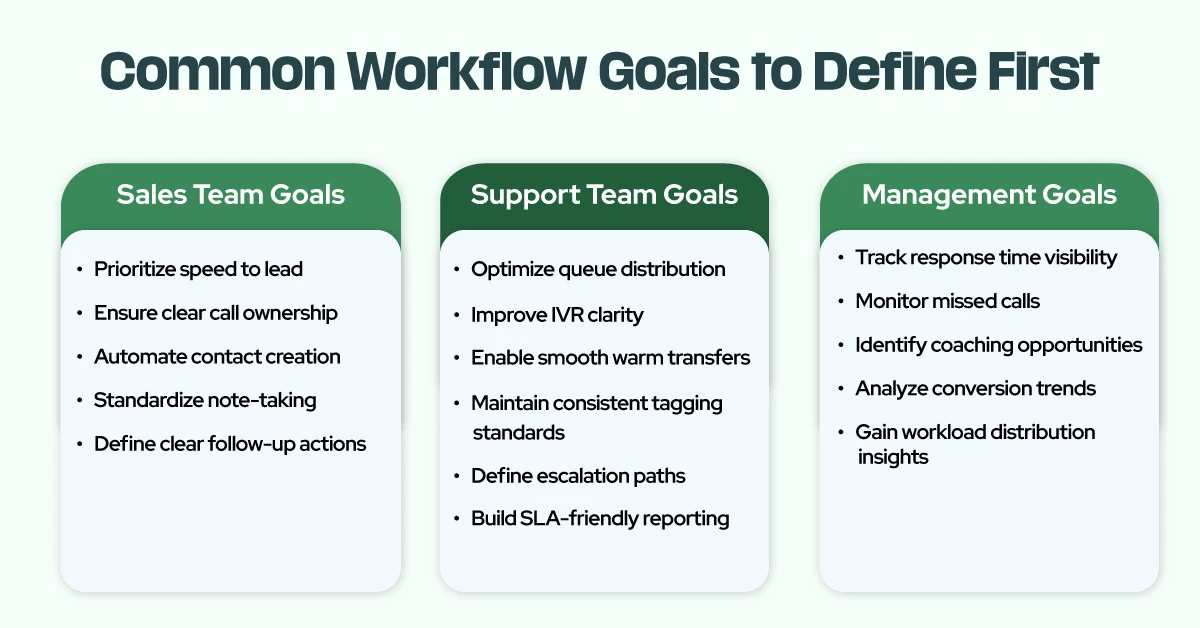
Common workflow goals to define first
Sales team goals
A sales workflow may need to prioritize speed to lead, call ownership, automatic contact creation, note-taking standards, and clear follow-up actions.
Support team goals
A support workflow may need queue distribution, IVR clarity, warm transfers, tagging standards, escalation paths, and SLA-friendly reporting.
Management goals
Managers usually need better visibility into response time, missed calls, coaching opportunities, conversion trends, and workload distribution.
Map the full call journey
A strong Aircall workflow covers the entire customer conversation lifecycle. That includes what happens before the call, during the call, and after the call. If one of those stages is weak, performance suffers even if the call itself goes well.
Before the call
Your team should know where calls are coming from, who owns them, and what information is available when the phone rings. This is where number structure, routing rules, business hours, voicemail setup, and CRM syncing start to matter.
During the call
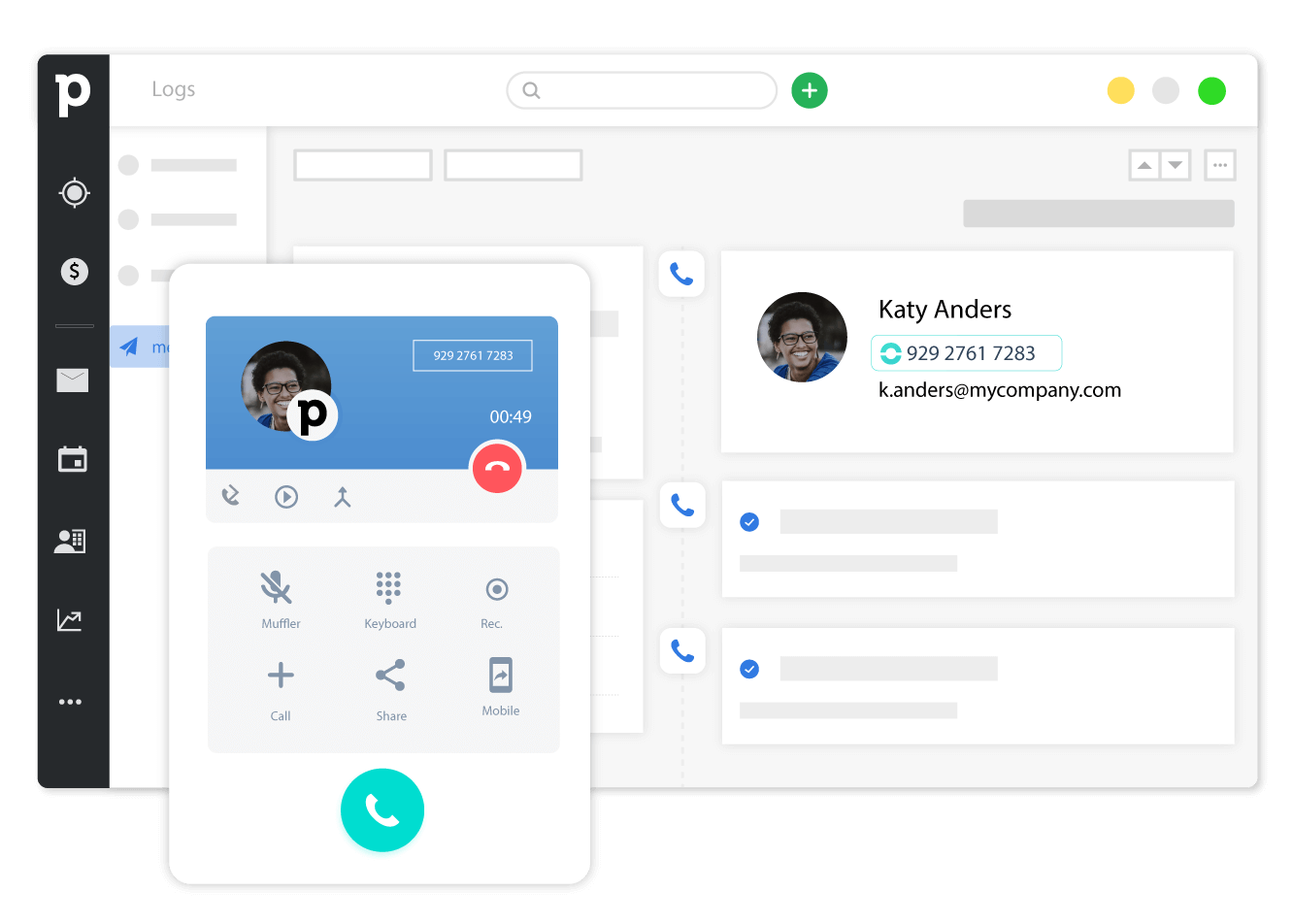
Agents need immediate context, clear transfer options, and a consistent way to label the conversation. Good workflows reduce the need to ask customers for the same information twice.
After the call
The post-call step is where many teams lose momentum. If notes are skipped, tags are inconsistent, or follow-up tasks are not created, the workflow breaks. The best Aircall workflows make post-call work simple and predictable.
Build routing around customer intent
Call routing should reflect why people are calling, not just who is available. If every inbound caller enters the same queue, the team wastes time sorting basic requests that could have been handled better at the first step.
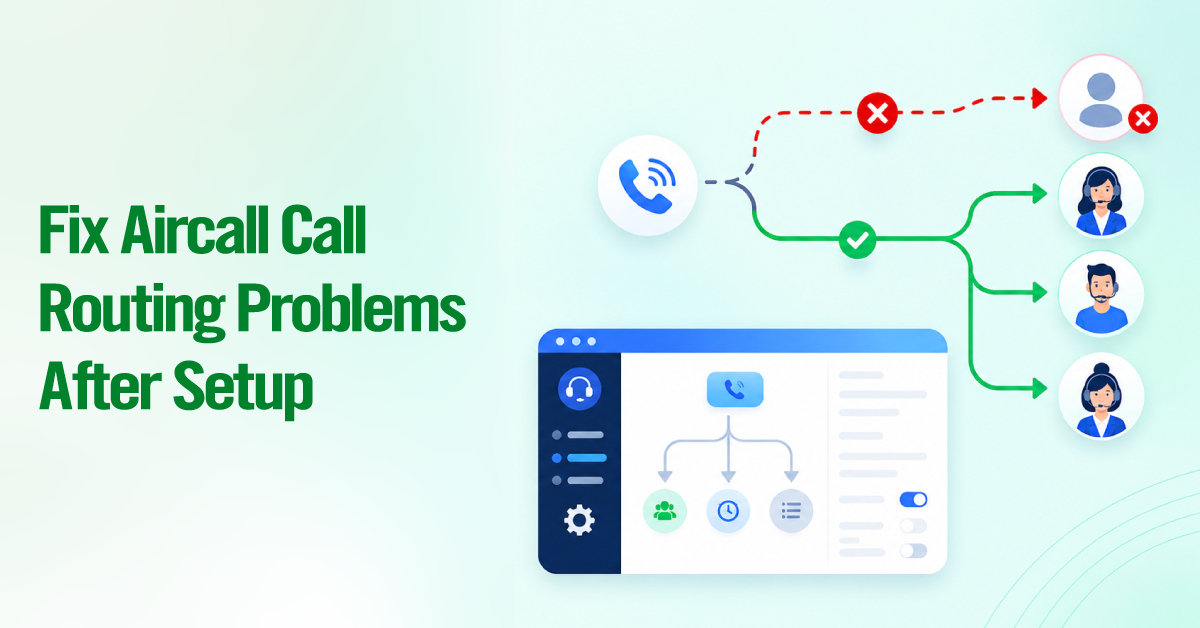
Create routing paths based on the most common call reasons. That may include new sales inquiries, existing customer support, billing questions, partner inquiries, or location-based lines. The goal is to get the right caller to the right person with as little friction as possible.
Ways to improve routing logic
Use a simple IVR menu
Keep the menu easy to understand. Too many options create confusion. Most businesses benefit from two to four clear choices.
Route by team or skill
Send high-intent sales calls to the team best equipped to respond quickly. Route technical or account-specific questions to agents with the right context.
Set fallback rules
Plan for overflow, after-hours calls, and no-answer scenarios. A workflow is only strong if it still works when the first routing option fails.
Connect Aircall to the tools your team already uses
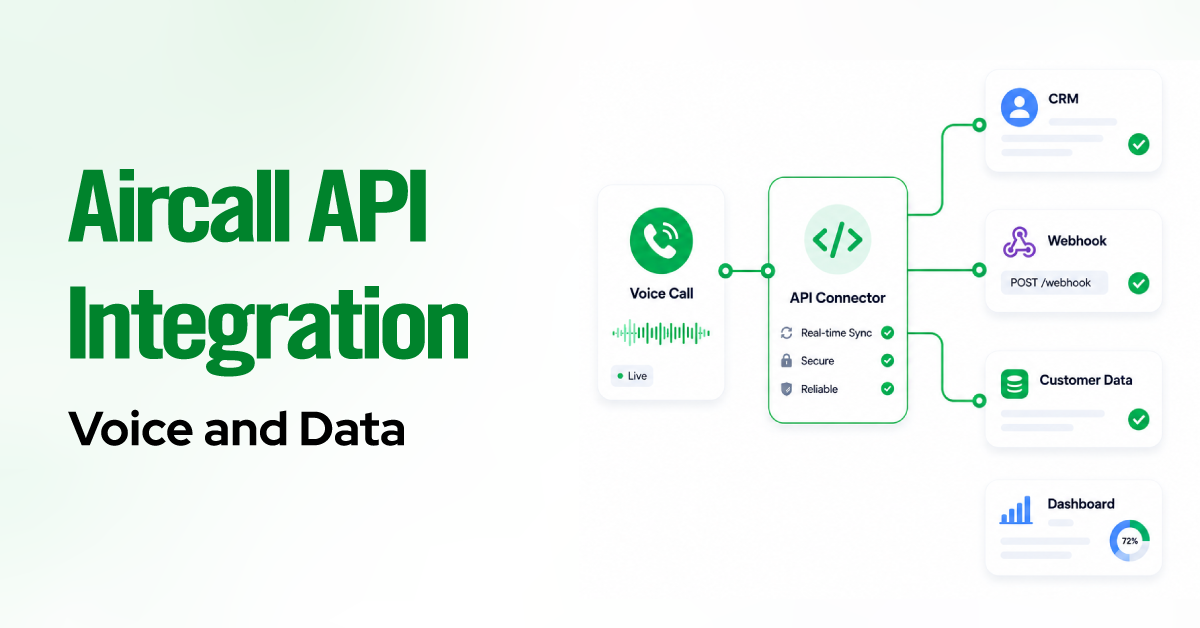
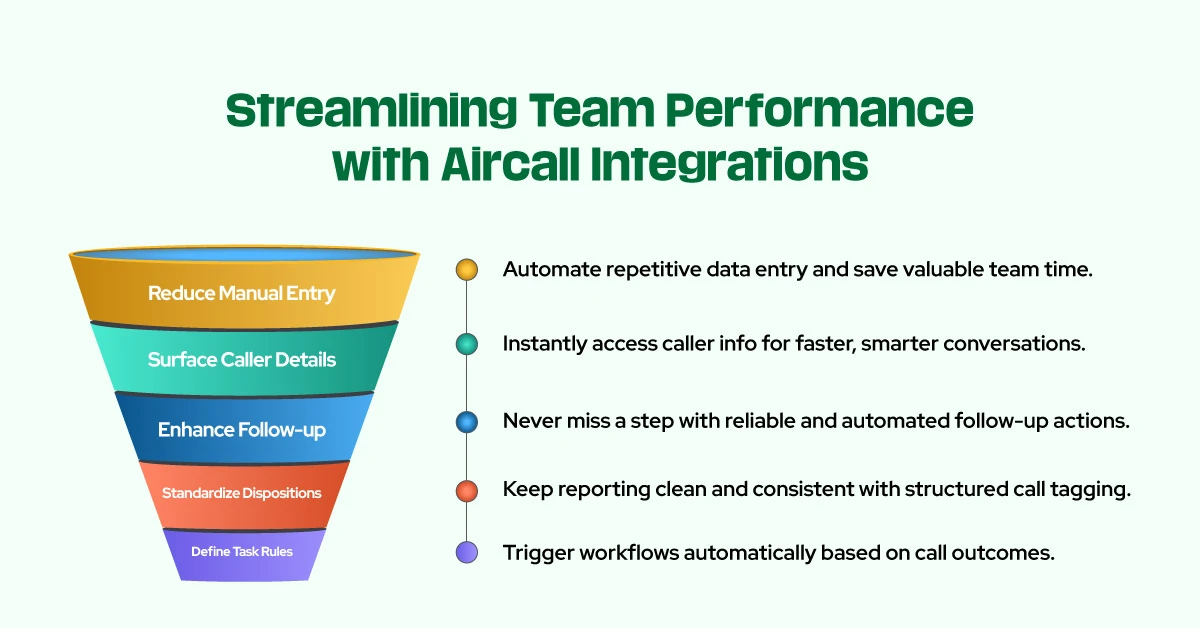
Aircall becomes more valuable when it is connected to the systems your team lives in every day. CRM and helpdesk integrations can reduce manual data entry, surface caller details, and make follow-up more reliable. This is one of the biggest opportunities for improving team performance because it removes friction from every interaction.
If your team uses HubSpot, Salesforce, Pipedrive, Zendesk, Intercom, or another key platform, the workflow should define exactly what syncs, who owns the data, and what happens when records do not match.
Integration best practices
Standardize dispositions and tags
Use a clear list of tags and outcomes so reports remain useful.
Define task creation rules
Make sure missed calls, unanswered follow-ups, or qualified lead conversations trigger the right action.
Review ownership logic
Avoid confusion around who receives the activity record when multiple users touch the same contact.
Create call handling standards your team can follow
Even the best technical workflow needs human consistency. Your team should know how to answer, transfer, log, and close calls within the process. That does not mean forcing robotic conversations. It means creating enough structure that the workflow supports performance rather than depending on guesswork.
Document standards for greetings, verification, note-taking, tagging, escalation, and next-step scheduling. This is especially important for growing teams where new reps need a quicker ramp-up.
Use reporting to refine the workflow over time
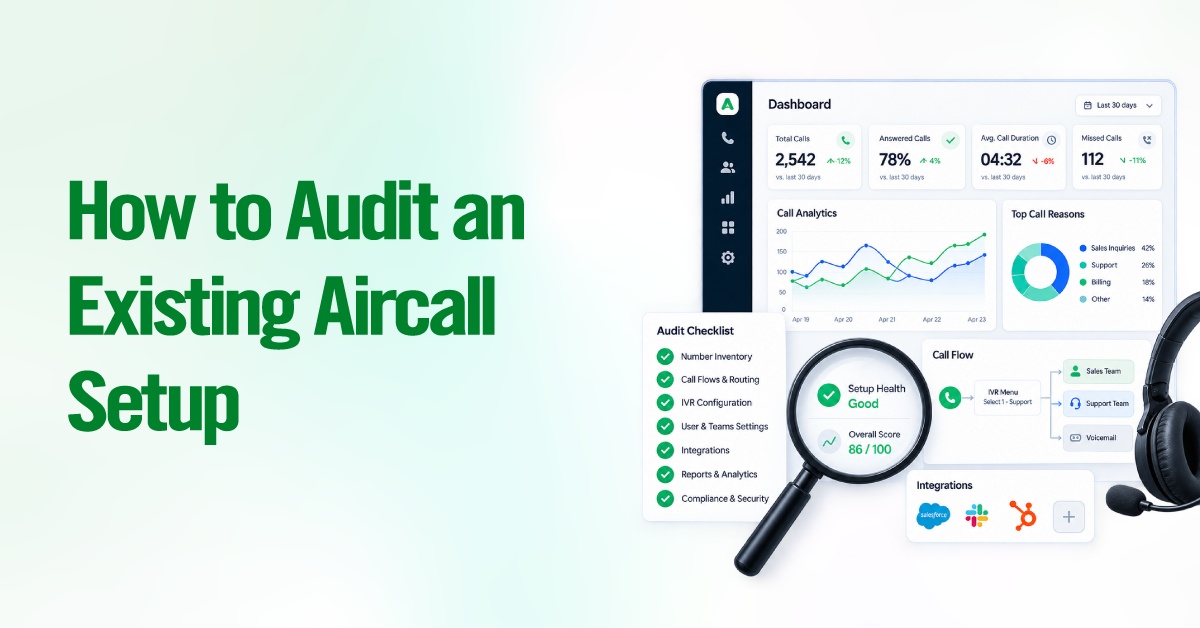
A workflow should not stay static. Review call metrics regularly to spot bottlenecks and coaching opportunities. Look at missed call volume, wait times, answer rates, transfer frequency, first-call resolution trends, and outcome patterns. The right data helps you improve the system instead of making assumptions.
A small process tweak can often create a meaningful performance gain. For example, shortening an IVR menu, reassigning overflow calls, or cleaning up post-call tags may improve response time and reporting quality at the same time.
Where Aircall Consulting fits in
Many teams know they need a better call workflow but do not have time to design it properly while running daily operations. That is where Aircall Consulting helps. We work with businesses to structure routing, integrations, automation, reporting, and user adoption around real business goals. Whether you are launching Aircall for the first time or rebuilding an underperforming setup, we help turn the system into a practical performance tool.
Final thoughts
An Aircall workflow improves team performance when it is designed around speed, clarity, ownership, and follow-through. The strongest setups are not the most complicated. They are the ones that remove friction for agents and customers at every stage of the call journey. When routing, integrations, standards, and reporting work together, your team can move faster and deliver better outcomes with less manual effort.