

Rolling out Aircall to a growing sales team is exciting but without proper onboarding, even the best VoIP system gets misused, underutilized, or ignored. The result? Poor call data, inconsistent follow-ups, and missed revenue opportunities.
To drive real adoption, your Aircall training should be simple, behavior-focused, and directly tied to sales outcomes, not features.
Step 1: Start With the “Why”
Before teaching reps how to use Aircall, explain why it matters to them. Reps adopt tools faster when they clearly see personal value.
Show how Aircall helps them:

-
Save time with automatic call logging and CRM sync
-
Increase daily call volume with fewer clicks and faster dial-outs
-
Improve deal visibility through call activity tracking
-
Get better coaching using call recordings and real-time feedback
Rule of thumb: If a rep can’t explain how Aircall makes their day easier, adoption will stall.
Step 2: Train the 5 Core Aircall Behaviors (Not Every Feature)
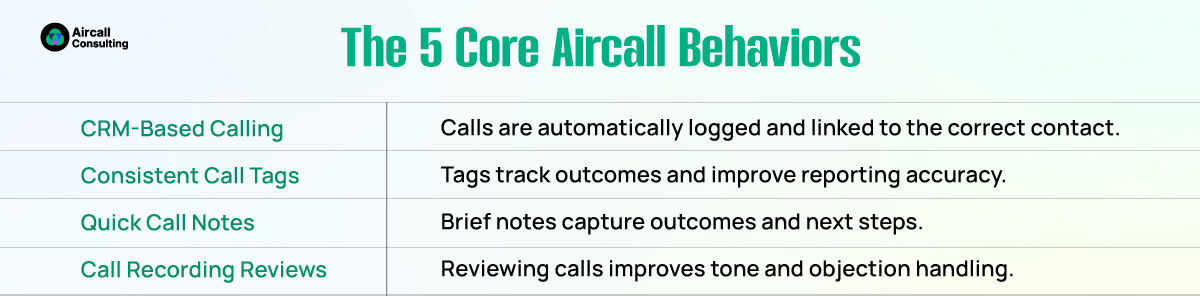
Instead of overwhelming reps, focus training on the five habits that actually impact performance.
1. Make calls directly from the CRM
Reinforce CRM-linked dialing so every call is logged automatically and tied to the correct contact or deal.
Outcome: Cleaner data, better reporting, no manual work.
2. Use tags and call dispositions consistently
Standardize tags like Qualified Lead, Not Interested, or Voicemail.
Outcome: Accurate forecasting, better pipeline visibility, and smarter follow-ups.
3. Spend 10 seconds on clear call notes
Encourage short notes that capture:
-
Call outcome
-
Objections raised
-
Next action
Outcome: No lost context, smoother handoffs, stronger follow-ups.
4. Review call recordings for self-coaching
Teach reps to listen to at least one call per day or per week.
Focus on tone, objection handling, and clarity.
Outcome: Faster skill improvement without constant manager intervention.
5. Follow up using automated tasks
Use CRM workflows triggered by missed calls or specific tags.
Outcome: No lead leakage and consistent response times.
Step 3: Keep Training Simple and Repeatable
Skip long decks and complex SOPs. High adoption comes from short, repeatable learning.
Effective formats include:
-
15-minute live demos showing real workflows
-
One-page cheat sheets or 2–3 minute video clips
-
Weekly “Aircall wins” shared in team meetings
Reinforce usage by highlighting:
-
Faster deal movement
-
Saved time
-
Coaching improvements
Final Takeaway
Successful Aircall training isn’t about teaching every feature. It’s about building a few strong habits that reps repeat every day. When training is simple, practical, and tied to real sales outcomes, adoption happens naturally and performance follows.